
ARTICLE SUMMARY
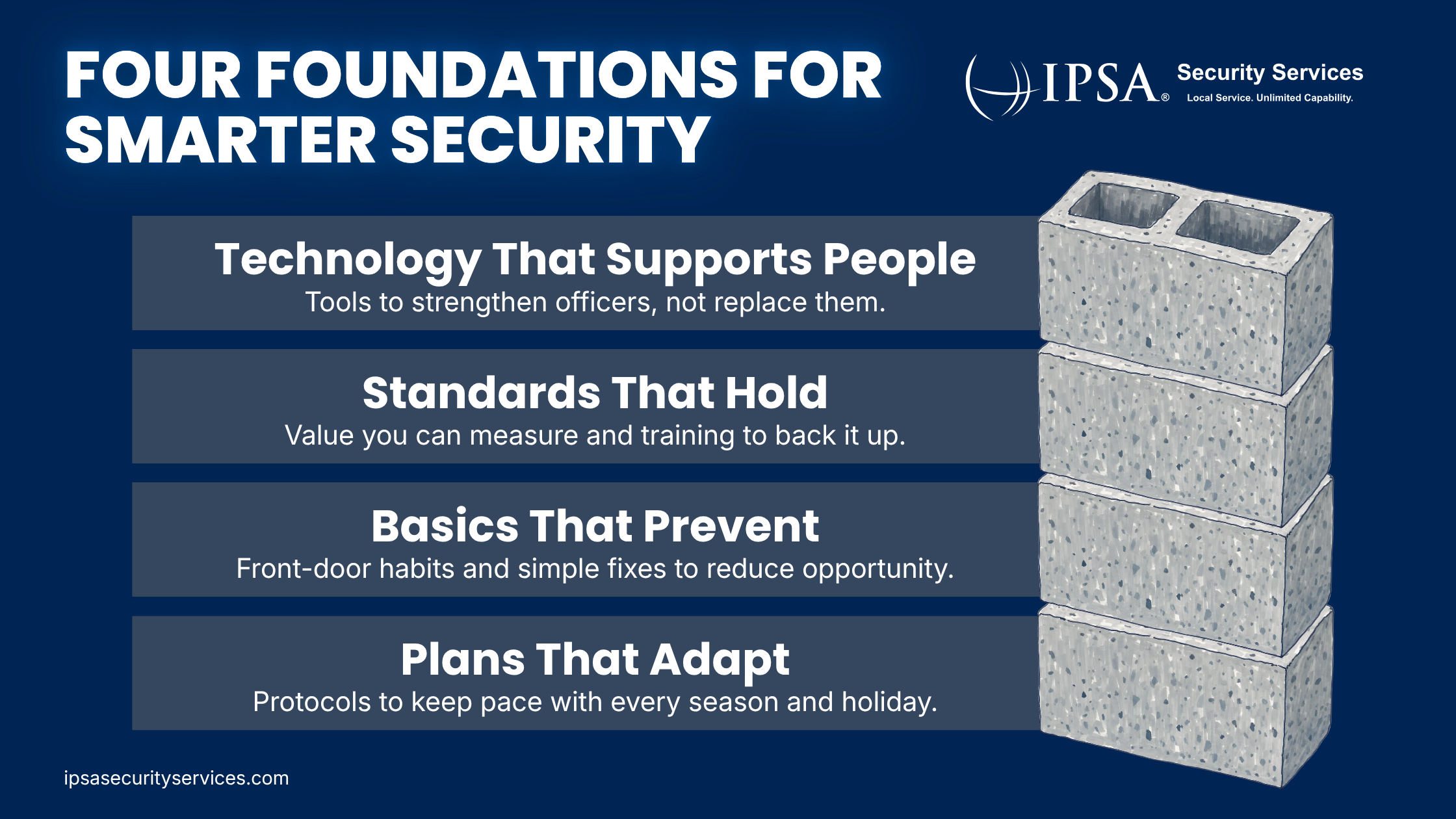
Technology that supports people, standards worth investing in, basics that prevent problems, and risks that follow the calendar: four themes run through everything we’ve written on property security this year. This guide gathers the ideas in one place, with links to the full posts, so you can find the ones most useful for your property.
What a Year of Security Topics Has in Common
Technology-supported officers, strategic security services, unique property-focused safety and seasonal transitions. The topics look different, but the thread is the same. Smarter property security comes from prepared people, supported by the right tools, working in ways that guests and employees barely notice.
We’ve grouped the ideas by theme, and each section links to the full post if you want to go deeper.
Technology That Supports the People on Post
Technology works best when it makes people better at the job. It fails when it tries to replace them.
Vigilis: Real-Time Support for Every Officer

Every site is different. Every shift is different. Binders and static PDFs ask officers to remember everything, under pressure, in places they may not know well.
Vigilis closes that gap. At its center is VAL (Vigilance, Assistance, and Leadership), a virtual field supervisor that officers can ask by voice or text. VAL was even named after one of IPSA’s own officers at 2700 North Central, because the system was built around real shifts and real questions.
On a typical shift, VAL helps officers:
- Know what to check first at a new site, using site-specific protocols from post orders
- Find out who to contact and when, instead of escalating unnecessarily
- Capture patrol photos and short videos that are analyzed to catch issues earlier, with no new QR codes or checkpoint labels
- Communicate in real time with Spanish-speaking staff through built-in translation
Behind the scenes, the platform shows us where instructions are unclear and where extra training would matter most, so we can improve before a problem forces us to. At IPSA, technology is not the story. People are.
Vigilis doesn’t replace an officer’s judgment. It makes sure no officer makes the call alone.
Predictive Technology: Data Flags It, People Decide
An alert shows unusual access activity on the third floor. Within seconds, your facility manager knows it’s the new contractor who forgot to badge out. That’s the promise of predictive technology done well.
Today’s tools can separate routine activity from concerning patterns, score threats in real time, and connect access, incident, and risk data in one view. Your team spends less time chasing false alarms and more time on meaningful work.
But no algorithm can read intent. A system can flag activity at the loading dock. Only a trained officer who knows your facility can tell a genuine concern from a vendor who showed up unexpectedly. That judgment is what prevents needless escalation and catches the real problems.
Trust is part of the equation, too. The most advanced security system fails if employees and guests feel surveilled rather than protected.
Deploy technology with a clear purpose, and make sure your team can explain the “why” to anyone who asks.
What Strategic Security Is Made Of
A security program is only as strong as the people carrying it out. The budget behind it and the training that prepares them both come back to the same truth: the people on post are the program.
Smart Budgeting: Paying for Value, Not Just Coverage
Every property manager faces the same question sooner or later. What is our security budget actually buying?
Cutting costs and spending wisely aren’t the same thing. Most properties don’t need armed guards. They need trained professionals who prevent problems before they start, and who lower liability while keeping the guest experience intact.
That’s why smart security budgeting starts with an assessment, not a quote. Before anyone steps on post, you should know your entry points, peak risk hours, compliance needs, and incident history. That baseline shapes the right-sized program and gives you something to measure results against.
From there, a structured rollout matches officers to the environment, walks them through the property before day one, and puts real-time reporting in place.
You can find cheaper security. The question is whether you can see what it delivers.
Training: Preparing Officers for the Moments That Matter
Value only holds up if the officers behind it are ready for the moment in front of them.
A guard card is where preparation begins, not where it ends. Officer training that sets a higher standard includes:
- CPR, First Aid, and AED certifications kept current
- Quarterly hands-on training and ongoing online coursework
- Site-specific training on each client’s people, systems, and procedures
- De-escalation skills built on calm, clear communication
“Continuous training is a good way to teach guards new techniques and different ways to handle situations—and it helps stop complacency.”
— Michael Hutton, Operations Manager, IPSA Security Services
Training also needs a way to show that it works. Attendance, patrol completion, site knowledge, and client rapport are all standards an officer can be measured against.
When you’re evaluating a security partner, ask two questions: What do you train for, and how do you prove it?
Prevention Starts with Property and Facility Basics
Not every safeguard involves new technology. Some of the most effective start at the front door and with an understanding of how crime happens.
Visitor Management: Turning the Front Desk into a Security Tool
A visitor log seems like a formality until the moment you need it. Then it becomes the most important page in the building.
Effective visitor management does six jobs at once:
- Controls access by creating accountability at the point of entry
- Gives first responders an accurate headcount during an evacuation
- Documents who was on-site, and when, if an incident occurs
- Keeps you audit-ready for rules like HIPAA
- Reveals patterns, like a contractor checking in outside permitted hours
- Holds vendors and contractors accountable for where they worked
The method matters, too. On a paper sign-in sheet, every visitor can see everyone who signed in before them, which means a competitor could learn which vendors and partners came through your doors this week. A digital kiosk captures each check-in privately, timestamps it, and can notify the host or trigger a badge automatically.
Whichever method you choose, the person behind the desk sets the tone. The best front-of-house security experience is one where the guest doesn’t feel processed; they feel received.
A visitor log only works when it’s used for every visitor, every time. Train your team on why it matters, not just how it works.
The Crime Triangle: Closing the Door on Opportunity
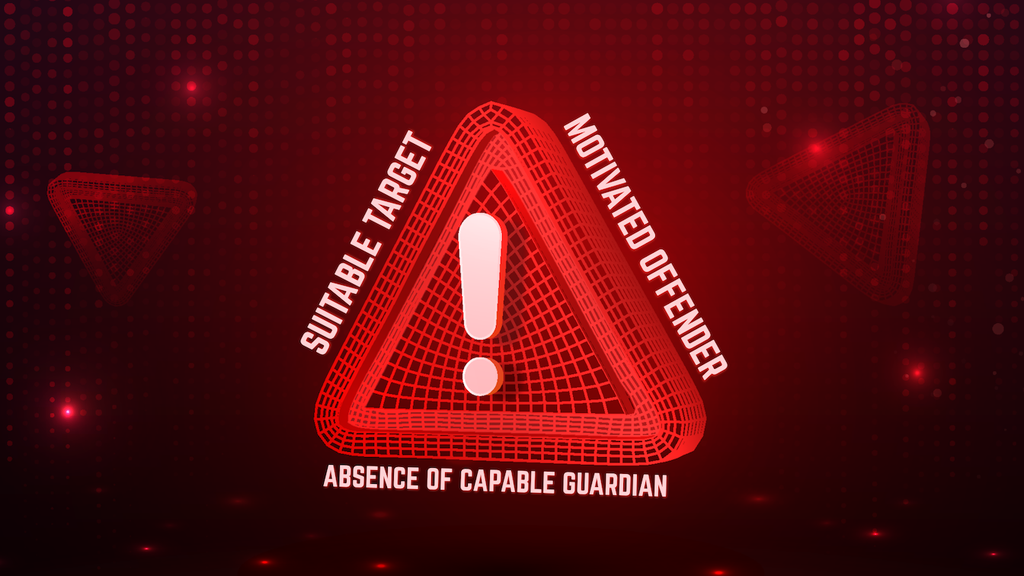
Crime has a recipe. It takes a motivated offender, a suitable target, and the absence of a capable guardian, all in the same place at the same time. Remove one ingredient and the risk drops sharply.
You can’t always control who wants to commit a crime. You can control whether your property is an easy target and whether a guardian is present. That’s the idea behind the Crime Triangle, and it’s the lens we use when assessing every property.
A property-level assessment looks at:
- Lighting in entry points, parking areas, loading docks, and pathways between buildings
- Access control procedures that are enforced consistently, not loosely
- Camera coverage judged by effectiveness, not just presence
- Patrols that vary timing and routes so no one can predict the gaps
- Landscaping kept to the “three-foot, six-foot rule”: shrubs below three feet, tree canopies above six
“Regular assessments help ensure security measures remain effective as property conditions, occupancy, and risks change. They allow IPSA to identify emerging concerns early and adjust security strategies before issues escalate.”
— Steve Hawkins, Account Manager, IPSA Security Services
The fixes that work best are usually simple and operational, executed with continued discipline and education.
Risks That Follow the Calendar
Some risks arrive on a schedule. A plan built for one season rarely fits the next.
Pool Safety: Five Pillars, One System
Drowning is the leading cause of unintentional injury death for children ages 1 to 4. For a property manager, that makes pool safety a matter of compliance, liability, and community well-being all at once.
No single measure covers it. Every facility needs five pillars working together:
- Access control: electronic credentials, scheduled hours, and self-latching gates as a backup
- Monitoring and supervision: staffing, cameras, and usage data in layers
- Emergency preparedness: rescue equipment, communication systems, and regular drills
- Technology integration: drowning detection, chemical monitoring, and real-time reporting
- Policy and communication: clear signage and rules that are enforced consistently
Then the pillars flex to fit the property. A wellness club has to serve toddlers and seniors at the same time. A multi-family complex deals with constant resident turnover. A gated community expects safety that stays out of sight. An HOA has to keep standards steady as volunteer boards rotate.
Compliance is where you start, not where you finish. Legal and regulatory requirements serve as the minimum baseline for pool safety, not the finish line.
Treat compliance as the floor, then build the rest of your program on all five pillars.
Seasonal Transitions: Matching Your Program to the Season
Security protocols built for June rarely fit November. Daylight shifts, vendor traffic picks up, and patrol timing that made sense in July stops lining up with sunset.
Lighting is the most immediate change, and it hits our two markets differently. When Daylight Saving Time ends, Austin’s sunset jumps an hour overnight. Phoenix doesn’t observe it, so sunsets drift earlier more gradually. Seasonal transitions call for the same fix in both cities.
A quick fall review should cover:
- Patrol start times that match the new dusk, not last season’s schedule
- Cameras, access panels, and drainage after monsoon season in Arizona
- Propped doors and cracked windows once milder weather sets in
- HVAC and maintenance visits, which are temporary access events that need credentials expiring when the job does
None of this requires rebuilding your security program from scratch, just a deliberate pass through it before the season fully turns.
Walk your property at the new dusk, not the old one.
Holiday Workplace Security: Welcome Guests, Protect People
The holidays change who walks through your doors and why. Guests arrive for gatherings, seasonal staff start badging in, and vacations leave hybrid schedules uneven. Holiday workplace security has to protect people without dimming the welcome.
It starts at the front desk, where the welcome and the screening should feel like one interaction. A few habits help:
- Greet first, verify second
- Issue end-dated badges for seasonal staff and guests, so access expires when the need does
- Keep decor and displays from blocking sightlines or hiding entrances
- Put security, HR, and facility management at one table, so officers hear about changes before they reach the door
Familiar faces matter just as much. In one survey, 32% of employees admitted they aren’t comfortable reporting safety issues. An officer who learns names and is easy to approach gives people a low-pressure place to say that something feels off.
“It was like they’d been there for years.”
— Jolene Brown, Community Manager, Orpheum Lofts
A welcoming team builds trust fast, and trust is what gets small concerns reported before they grow.
Carrying It into the New Year
Across technology, training, a front desk, or a pool gate, the lesson holds: security works best when it’s built around the people who deliver it and the people who rely on it. The properties that do well review their programs often and adjust before something forces the issue.
Let’s build a plan around your property’s needs, so the year ahead starts with smarter property security already in place.
There’s more on the way. We’re taking a short break from the blog and will be back in January with fresh topics for the new year. Following along on LinkedIn and Facebook is the easiest way to catch each new article as it publishes.